Women at a Wedding

These ladies were guests at the tribal wedding of Thokozani and Ngoblie in July of 2008. Their joyous smiles say it all.
Thursday, July 29, 2010

The Last Day
Sunday July 25, 2010
Sunday was our last in Swaziland. It is always so sad to say goodbye, and it seems with each passing visit it becomes harder. To come to know people on such an intimate level, to share their stories and to be a part of their lives is indeed an honor and a privilege, and I always leave with the wonder of if we shall ever meet again. I try not to think in those terms. I have never left Swaziland with thoughts that I’ll never return, nor have I committed in my heart to definitely return. A trip such as this is difficult on so
We started the day with church service. Once again the powers that be (Make Janice) directed that I bring the word of God. I think it is ironic that one who continues to struggle to define his own faith is repeatedly asked to speak in the Zionist church. I think it assumed that since I am male and older, that I somehow would have something to impart of spiritual profundity, but luckily, after the all night vigil, most people were nodding and some were nearly falling out of their chairs. Again, I was brief and if I committed any breaches in protocol no one seemed to be awake enough to notice.
After service the first round of goodbyes commenced. I will always be grateful for the honor bestowed upon us by the congregation and we have developed friendships that will last a lifetime, irrespective of time and distance. Babe (now Bishop) Mkhonta insisted we stop by his homestead for jut a few moments, and we did so. He offered a song and a blessing for our journey. He is such a kind and honorable man. I just hope that being the Bishop doesn’t prove too stressful for him.
The next order of business was to stimulate the economy of Swaziland one last time, so in the remaining days of daylight we stopped at the market to empty our pockets and fill our suitcases.
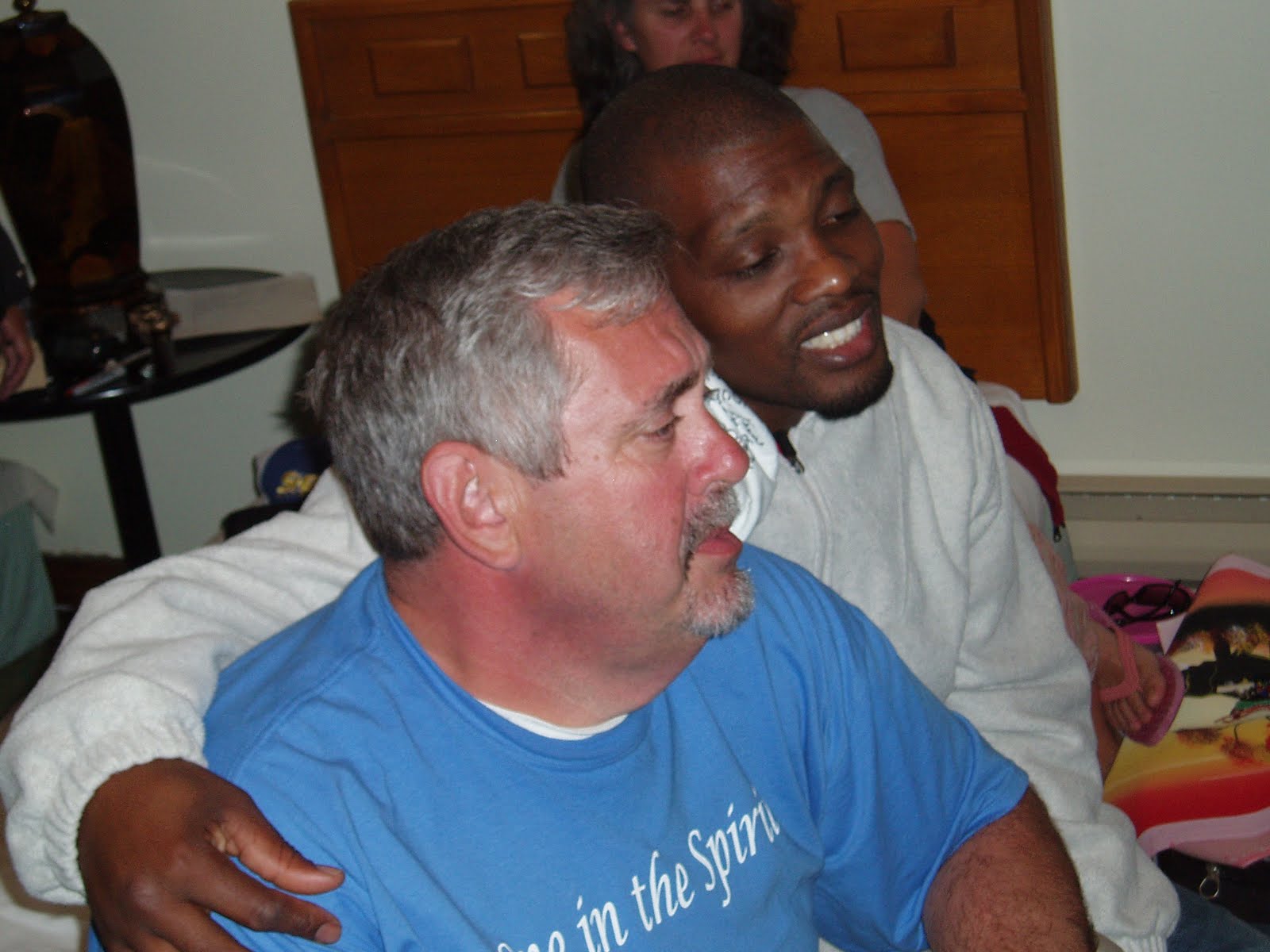
Back at the hotel, the core group of many of our closest friends stopped by, which has almost become a tradition, Thokozani, his wife Ngobeli, Vuyo, Bela and Sandile. Of course when more than two Swazi’s get together singing breaks out, and so it was. There we were, all eleven of us and our five friends singing and dreading the time we must say goodbye. But alas, we did, and it was difficult. I am so grateful to have again had this experience.
Sunday was our last in Swaziland. It is always so sad to say goodbye, and it seems with each passing visit it becomes harder. To come to know people on such an intimate level, to share their stories and to be a part of their lives is indeed an honor and a privilege, and I always leave with the wonder of if we shall ever meet again. I try not to think in those terms. I have never left Swaziland with thoughts that I’ll never return, nor have I committed in my heart to definitely return. A trip such as this is difficult on so
We started the day with church service. Once again the powers that be (Make Janice) directed that I bring the word of God. I think it is ironic that one who continues to struggle to define his own faith is repeatedly asked to speak in the Zionist church. I think it assumed that since I am male and older, that I somehow would have something to impart of spiritual profundity, but luckily, after the all night vigil, most people were nodding and some were nearly falling out of their chairs. Again, I was brief and if I committed any breaches in protocol no one seemed to be awake enough to notice.
After service the first round of goodbyes commenced. I will always be grateful for the honor bestowed upon us by the congregation and we have developed friendships that will last a lifetime, irrespective of time and distance. Babe (now Bishop) Mkhonta insisted we stop by his homestead for jut a few moments, and we did so. He offered a song and a blessing for our journey. He is such a kind and honorable man. I just hope that being the Bishop doesn’t prove too stressful for him.
The next order of business was to stimulate the economy of Swaziland one last time, so in the remaining days of daylight we stopped at the market to empty our pockets and fill our suitcases.
Back at the hotel, the core group of many of our closest friends stopped by, which has almost become a tradition, Thokozani, his wife Ngobeli, Vuyo, Bela and Sandile. Of course when more than two Swazi’s get together singing breaks out, and so it was. There we were, all eleven of us and our five friends singing and dreading the time we must say goodbye. But alas, we did, and it was difficult. I am so grateful to have again had this experience.
Monday, July 26, 2010


The Consecration
Saturday July 24, 2010
The Consecration of the Bishop
Four years ago on my first trip to Swaziland, the first face I saw when we deplaned in Johannesburg was that of Babe Mkhonta. Over the past two trips he has been our constant companion and he has spent many hours travelling with our teams throughout Swaziland. I have come to know him as a kind and compassionate man who cares deeply for the people of his church and the people of Swaziland. He has served as Pastor of Kukhany Okusha and with the Bishop’s failing health and decision to retire, Babe Mkhonta was selected to succeed the Bishop. Today was his consecration ceremony, a four hour church service, a break for dinner (a huge feast) and then an all night vigil.
Preparations have been underway all week for the high pomp and protocol of this event, including a cow slaughter on Thursday to feed the numerous guests that were expected. The church has gotten touch-up painting, cleaning and decoration and there has been an aura of anticipation throughout the membership.
We arrived at 12:00 noon as instructed and again wore the uniforms of Kukhany Okusha. The church yard soon began to fill with honored guests from throughout Swaziland, South Africa and even the U. S. It was truly amazing to see all of the different priests and bishops from throughout the region, each wearing the robe and carrying the staff of their respective congregations and affiliations. Babe Mkonta arrived, accompanied by the current Bishop, Bishop Dlamini, and they led the procession into the church. There was much protocol to be considered, especially who sat where. The Archbishop, who presides over the denomination of which Kukhany Okusha belongs, seemed to be the highest ranking clergy in attendance. Global Ministries, which is headquartered in Indianapolis and under whose auspices our team operates, sent a delegation as well.
There was much singing and dancing and praying and speaking. Being male and the oldest member of our group, and at the request (direction) of Make Janice Wilson, our team captain, I spoke on behalf of our group. I know just enough to avoid any gaffes in protocol and my words were brief, but adequate I feel.
After a four or five hour service, a break was called and food was served. As we have become accustom to, status dictates where and what you are served. We were not seated at the tables that were reserved for visiting priests and bishops, but we were served huge plates of chicken, beef, hominy, rice, beans and salad. We were also afforded a spoon. Those who ranked below us in status were served either chicken or beef and pap, which is much like corn meal mush.
At 9:00 PM the service reconvened and the all night vigil began. This seemed a good time to take our leave, so we boarded our vans and headed back to our accommodations. The vigil would continue without our presence.
The Consecration of the Bishop
Four years ago on my first trip to Swaziland, the first face I saw when we deplaned in Johannesburg was that of Babe Mkhonta. Over the past two trips he has been our constant companion and he has spent many hours travelling with our teams throughout Swaziland. I have come to know him as a kind and compassionate man who cares deeply for the people of his church and the people of Swaziland. He has served as Pastor of Kukhany Okusha and with the Bishop’s failing health and decision to retire, Babe Mkhonta was selected to succeed the Bishop. Today was his consecration ceremony, a four hour church service, a break for dinner (a huge feast) and then an all night vigil.
Preparations have been underway all week for the high pomp and protocol of this event, including a cow slaughter on Thursday to feed the numerous guests that were expected. The church has gotten touch-up painting, cleaning and decoration and there has been an aura of anticipation throughout the membership.
We arrived at 12:00 noon as instructed and again wore the uniforms of Kukhany Okusha. The church yard soon began to fill with honored guests from throughout Swaziland, South Africa and even the U. S. It was truly amazing to see all of the different priests and bishops from throughout the region, each wearing the robe and carrying the staff of their respective congregations and affiliations. Babe Mkonta arrived, accompanied by the current Bishop, Bishop Dlamini, and they led the procession into the church. There was much protocol to be considered, especially who sat where. The Archbishop, who presides over the denomination of which Kukhany Okusha belongs, seemed to be the highest ranking clergy in attendance. Global Ministries, which is headquartered in Indianapolis and under whose auspices our team operates, sent a delegation as well.
There was much singing and dancing and praying and speaking. Being male and the oldest member of our group, and at the request (direction) of Make Janice Wilson, our team captain, I spoke on behalf of our group. I know just enough to avoid any gaffes in protocol and my words were brief, but adequate I feel.
After a four or five hour service, a break was called and food was served. As we have become accustom to, status dictates where and what you are served. We were not seated at the tables that were reserved for visiting priests and bishops, but we were served huge plates of chicken, beef, hominy, rice, beans and salad. We were also afforded a spoon. Those who ranked below us in status were served either chicken or beef and pap, which is much like corn meal mush.
At 9:00 PM the service reconvened and the all night vigil began. This seemed a good time to take our leave, so we boarded our vans and headed back to our accommodations. The vigil would continue without our presence.
Thursday, July 22, 2010


Safari
Thursday July 22, 2010
Today was Safari. We took a planned break today to see one of Swaziland’s big game parks, Mkhaya. It was awesome to see the animals up close in their native, yet protected habitat. We were fortunate to be able to see elephants, giraffes, hippos, rhinos, wart hogs too numerous to mention and many other animals native to the area. We had lunch in the park and the main course was wildebeest, and it don’t taste like chicken. I didn’t particularly care for it, but added one more thing to my list of firsts.
Today was Safari. We took a planned break today to see one of Swaziland’s big game parks, Mkhaya. It was awesome to see the animals up close in their native, yet protected habitat. We were fortunate to be able to see elephants, giraffes, hippos, rhinos, wart hogs too numerous to mention and many other animals native to the area. We had lunch in the park and the main course was wildebeest, and it don’t taste like chicken. I didn’t particularly care for it, but added one more thing to my list of firsts.


Shewula
Wednesday July 21, 2010
It never rains in Swaziland during July, but today it poured. We drove to Shewula, which is high in the mountains on the Mozambique border. Kukhany Okusha operates a Neighborhood Care Point there caring for the orphaned and vulnerable children of the area. In contrast to Gigi’s Place which serves urban orphans, Shewula is very remote and distant. It is here where two years ago I wrote of the little girl wearing only one flip flop, for that is all that she possessed.
As we arrived, the rains began and the grassless play yard turned to a gullied mud lot. We went into the shelter with the children and teachers and the children sang to the background of the rain droning on the tin roof. We unloaded the mounds of flip flops, clothing and medical and school supplies. Remembering that two years ago we found no food in the store room at Shewula, we had stopped at the market on our way and had brought lots of fruit, rice, maize and bread as well as other staples. Even though the situation there did not appear quite as dire as it had two years ago, again the pantry was bare. The pastor explained that they had lost sponsorship of World Vision, a major food supplier for them, and really did not know how they were going to be able to sustain services.
Whereas the children of Gigi’s were engaging from the moment we arrived, these children were very timid and it was apparent very few visitors every made it to this remote area. They eventually warmed up to our presence and soon we were all involved playing, singing, making balloon hats and everyone who was shoeless got a new pair of flip flops. Again, many of the children wanted little more than to be held.
I hope I never get desensitized to a scene such as this. These children have absolutely nothing and in some cases nobody. It seems so redundant to set at the keyboard at the end of each day and type the same sad message, but on some level I feel compelled to record each story. For whom I do not know, perhaps for myself, or perhaps to honor those who have allowed me to share in their stories. I look at the pictures of the children, their faces, their eyes. Eyes that do not look away, but hold to you as if glancing away might somehow loose the connection, however brief and it may be.
Prayer:
Hollow eyes
Blank stares
Brown faces
Snotty noses
Rattling chests
Swollen bellies
God have mercy
Amen
It never rains in Swaziland during July, but today it poured. We drove to Shewula, which is high in the mountains on the Mozambique border. Kukhany Okusha operates a Neighborhood Care Point there caring for the orphaned and vulnerable children of the area. In contrast to Gigi’s Place which serves urban orphans, Shewula is very remote and distant. It is here where two years ago I wrote of the little girl wearing only one flip flop, for that is all that she possessed.
As we arrived, the rains began and the grassless play yard turned to a gullied mud lot. We went into the shelter with the children and teachers and the children sang to the background of the rain droning on the tin roof. We unloaded the mounds of flip flops, clothing and medical and school supplies. Remembering that two years ago we found no food in the store room at Shewula, we had stopped at the market on our way and had brought lots of fruit, rice, maize and bread as well as other staples. Even though the situation there did not appear quite as dire as it had two years ago, again the pantry was bare. The pastor explained that they had lost sponsorship of World Vision, a major food supplier for them, and really did not know how they were going to be able to sustain services.
Whereas the children of Gigi’s were engaging from the moment we arrived, these children were very timid and it was apparent very few visitors every made it to this remote area. They eventually warmed up to our presence and soon we were all involved playing, singing, making balloon hats and everyone who was shoeless got a new pair of flip flops. Again, many of the children wanted little more than to be held.
I hope I never get desensitized to a scene such as this. These children have absolutely nothing and in some cases nobody. It seems so redundant to set at the keyboard at the end of each day and type the same sad message, but on some level I feel compelled to record each story. For whom I do not know, perhaps for myself, or perhaps to honor those who have allowed me to share in their stories. I look at the pictures of the children, their faces, their eyes. Eyes that do not look away, but hold to you as if glancing away might somehow loose the connection, however brief and it may be.
Prayer:
Hollow eyes
Blank stares
Brown faces
Snotty noses
Rattling chests
Swollen bellies
God have mercy
Amen
Wednesday, July 21, 2010
A Braii at Gideon's
Tuesday
Tonight we were treated to a braii at the home of Babe Gideon. A braii is what we would call a cook out or barbeque. Babe Gideon is the Evangelist at Kukhany Ohusha, which as best I can figure is the officer in charge of the business workings of the church.
We arrived at Gideon’s home at about 6:30, which is well after dark. Bear in mind it is mid-winter here. Gideon’s home is high on a mountain side on the outskirts of Mbabane, the capital of Swaziland. We were welcomed by the entire extended Dlamini family. Make Lindelwe, Gideon’s wife assured us the cooking was completed, save for the meat and the men were given the task of preparing a fire outside on which the meat would be roasted. There were several men much younger than I, and in the Swazi tradition, they did the work and Gideon and I visited. Soon we were warming ourselves by a roaring fire. The African winter nights are very cool, so the fire served as the outdoor gathering spot. A fire had been laid in the fireplace in the great room of the Dlamini home as well, so guests tended to migrate back and forth, mingling and socializing. The night sky was breath taking and those who knew astronomy commented on the constellations and how they appeared different in the southern hemisphere. As for me, I only knew that there must be a million stars and I couldn’t tell Mars from Uranus. (Sorry, I couldn’t resist)
The bo bhuti (the younger boys) began preparing beef, chicken and sausages over the open fire and the Makes began laying out the feast indoors. As the preparations were underway, the Bishop arrived. The Bishop is the highest ranking official in at Kukhany Okusha and though he is in failing health and now completely blind, he still has a commanding presence. On my first visit to Swaziland, four short years ago, I came to know Babe Bishop as a powerful and eloquent speaker and a leader of the church in every sense of the word. It is both sad and shocking to see how his health has failed in such a short time. He has, after nearly 30 years, decided to step down as Bishop, and this Saturday Babe Mkhonta, the pastor of Kukhany Okusha will be consecrated as the new Bishop.
I have often said that Babe Mkhonta is perhaps one of the finest men I have ever known. He cares deeply for the church and has a kindness and caring that is both genuine and heartfelt. I know the transition to a new Bishop will have its challenges, but I can’t help but believe that the church will thrive under the leadership of once so dedicated to his people and their trials, of which there are many here.
After the meat was done, we were treated to a feast. All of the dished were authentic African recipes and it was truly delicious. As is often the case, no utensils were provided and we ate with our hands. My favorite of the dishes was chokolocka, a spicy stew of cabbage, beans, peppers, and other ingredients I can’t remember just now. However, Babe Gideon’s daughter has promised to write the recipe for me and bring it to the consecration on Sunday.
After dinner we all gathered in the living room around the fireplace and sang together. Make Happy, the Bishop’s wife commanded everyone to get on their feet and dance. Soon we were all singing and dancing and clapping and thoughts of orphanages and homeless children seemed far far away, at least for tonight.
Tonight we were treated to a braii at the home of Babe Gideon. A braii is what we would call a cook out or barbeque. Babe Gideon is the Evangelist at Kukhany Ohusha, which as best I can figure is the officer in charge of the business workings of the church.
We arrived at Gideon’s home at about 6:30, which is well after dark. Bear in mind it is mid-winter here. Gideon’s home is high on a mountain side on the outskirts of Mbabane, the capital of Swaziland. We were welcomed by the entire extended Dlamini family. Make Lindelwe, Gideon’s wife assured us the cooking was completed, save for the meat and the men were given the task of preparing a fire outside on which the meat would be roasted. There were several men much younger than I, and in the Swazi tradition, they did the work and Gideon and I visited. Soon we were warming ourselves by a roaring fire. The African winter nights are very cool, so the fire served as the outdoor gathering spot. A fire had been laid in the fireplace in the great room of the Dlamini home as well, so guests tended to migrate back and forth, mingling and socializing. The night sky was breath taking and those who knew astronomy commented on the constellations and how they appeared different in the southern hemisphere. As for me, I only knew that there must be a million stars and I couldn’t tell Mars from Uranus. (Sorry, I couldn’t resist)
The bo bhuti (the younger boys) began preparing beef, chicken and sausages over the open fire and the Makes began laying out the feast indoors. As the preparations were underway, the Bishop arrived. The Bishop is the highest ranking official in at Kukhany Okusha and though he is in failing health and now completely blind, he still has a commanding presence. On my first visit to Swaziland, four short years ago, I came to know Babe Bishop as a powerful and eloquent speaker and a leader of the church in every sense of the word. It is both sad and shocking to see how his health has failed in such a short time. He has, after nearly 30 years, decided to step down as Bishop, and this Saturday Babe Mkhonta, the pastor of Kukhany Okusha will be consecrated as the new Bishop.
I have often said that Babe Mkhonta is perhaps one of the finest men I have ever known. He cares deeply for the church and has a kindness and caring that is both genuine and heartfelt. I know the transition to a new Bishop will have its challenges, but I can’t help but believe that the church will thrive under the leadership of once so dedicated to his people and their trials, of which there are many here.
After the meat was done, we were treated to a feast. All of the dished were authentic African recipes and it was truly delicious. As is often the case, no utensils were provided and we ate with our hands. My favorite of the dishes was chokolocka, a spicy stew of cabbage, beans, peppers, and other ingredients I can’t remember just now. However, Babe Gideon’s daughter has promised to write the recipe for me and bring it to the consecration on Sunday.
After dinner we all gathered in the living room around the fireplace and sang together. Make Happy, the Bishop’s wife commanded everyone to get on their feet and dance. Soon we were all singing and dancing and clapping and thoughts of orphanages and homeless children seemed far far away, at least for tonight.
Tuesday, July 20, 2010


Monday, July 19, 2010


Monday, July 19, 2010
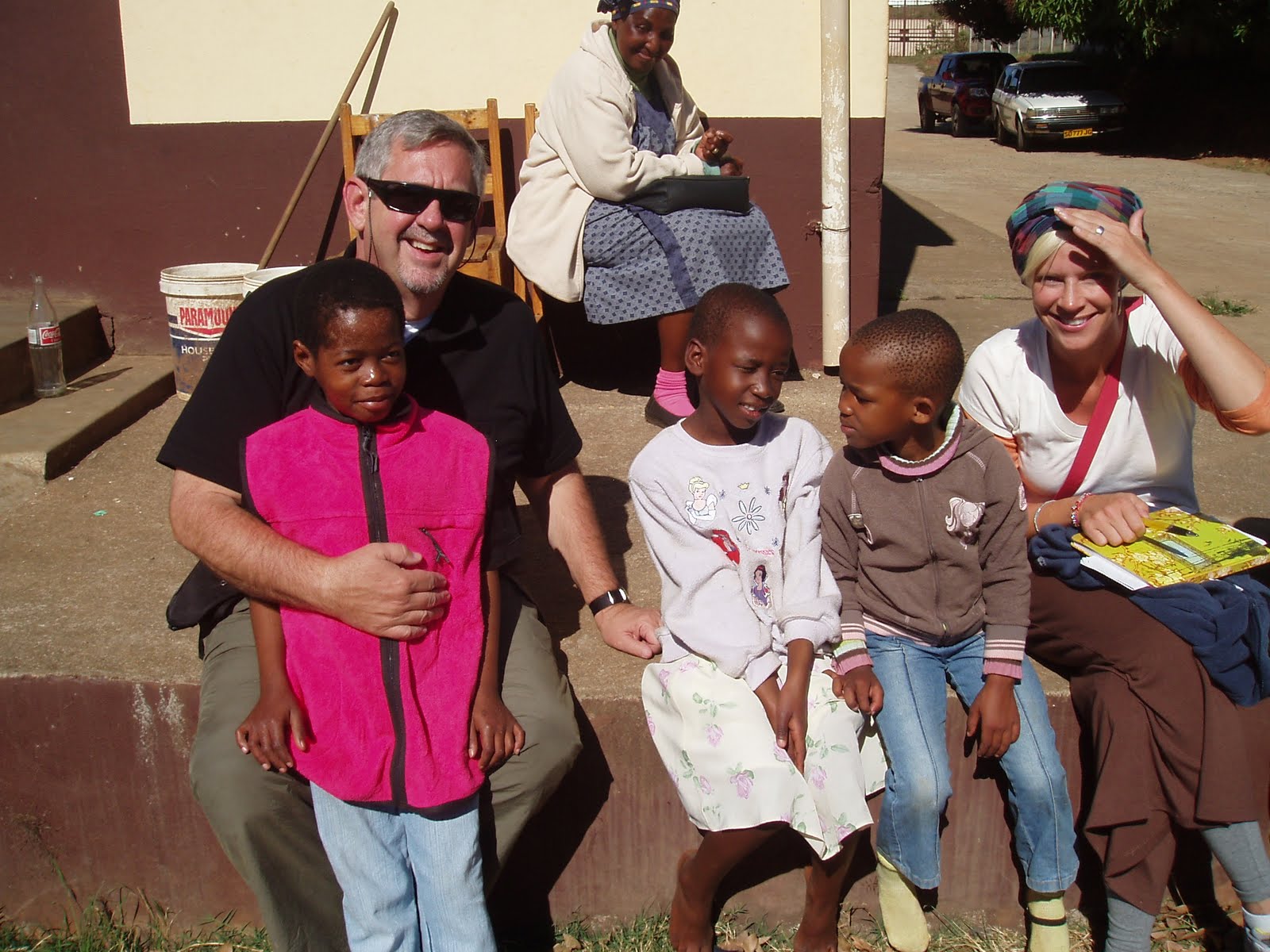
Today we went to Gigi’s Place. Gigi’s is a feeding station for street orphans in Manzini, the largest city in Swaziland. Although we have been to Gigi’s every time we have been in Swaziland, I tend to forget just how impacted these kids are and each visit opens my eyes anew to their vulnerabilities. The children range in age from toddlers to eight to ten years old. The children either live on the street or with whomever they can find refuge and come into Gigi’s each morning for instruction and their only meal for the day. They are the most vulnerable of the children with whom we come in contact, for their world outside the barbed wire fences of Gigi’s is one filled with predators and adult victims of poverty and homelessness with whom they must compete for food and shelter.
The children were expecting us and seemed so excited at our arrival. We had games, crafts, kazoos, suckers and the like, but it became apparent that what these children were starved for was the human touch. In reflecting on our day, Janice Wilson our team captain, so eloquently pointed out the huge difference our presence made in the lives of these children. Did we change the world today? Probably not, but for a time on this day these children knew the safe and loving care of adults. Fathers and mothers, brothers and sisters who really had nothing more to offer than to hold little ones in their arms; to play, to sing, to be silly, to care.
The children were expecting us and seemed so excited at our arrival. We had games, crafts, kazoos, suckers and the like, but it became apparent that what these children were starved for was the human touch. In reflecting on our day, Janice Wilson our team captain, so eloquently pointed out the huge difference our presence made in the lives of these children. Did we change the world today? Probably not, but for a time on this day these children knew the safe and loving care of adults. Fathers and mothers, brothers and sisters who really had nothing more to offer than to hold little ones in their arms; to play, to sing, to be silly, to care.

Subscribe to:
Posts (Atom)